|
The Cinema of Jean Renoir:
The Spectacle of the Real Life
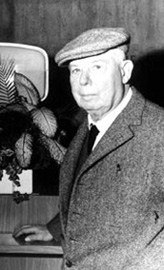
Once upon a time, in the city of Montmarte a boy was born. His father was a famous impressionist painter and his uncle was a popular cinematographer. He excelled in philosophy and mathematics. Then he joined the cavalry to protect his country. Before reaching his prime, he was working as a ceramist and a potter. On the journey to his prime, he was influenced by his wife, who was also his father's muse. As poetry and the love for nature made him whole, he found a way to express this surge of passion. Film was the medium he chose to show how he envisions the probable real life.
There were no heroes or villains in his world, just people, normal people who lived their daily lives as it was. He traveled beyond France and went to America. Here he found a new muse and a way of telling a story, he never told before. During his prime he refused to accept that he was part of a revolution, but he would find that he was only in retrospect in later years. Finally he guided students and helped spread his vision of how to create a vision. I vision I saw was that of Jean Renoir.
From a very young age he was exposed to the world of impressionism. It was his family that taught him how to think out of the box. They gave him an opportunity to understand the aesthetics of this movement which in effect gave him a lasting impression that he worked on. From the period when he was serving in the war, he learnt the dynamics of how to create relationships between different characters.
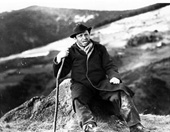 This is very much reflected in "the grand illusion" where two prisoners of war find themselves in dire situations. In many of his silent films he cast his wife Catherine Hessling. When she was a model for his father, he was still a ceramist and a potter. This again is another natural aspect of creativity in a form of reality. His love for her inspired him to think of how the real situation of love was. He did believe in that fact that love was blind, because in many of his films, the characters are confused about who and how much they love. Novels and playwrights also evoked him to capture theatre theatrics onto screen. Some of them include works of Emile Zola and Octave Mirbeau. He used stage actors instead of screen actors as he knew that they could hold real feelings longer. By understanding Chaplin's films, he was able to portray situations in which status, power and intelligence did not matter in the end.
In the silent era his main focus was to show many emotions in their true nature. For an example, let's take The Llittle Match Girl. An orphan girl sells matchsticks at the sidewalk in the cold blizzard during Christmas time. She falls asleep and dreams of a Christmas where she gets many presents and she is extremely happy. In the end when she awakes from her dream, she dies in the harsh cold. As we can see, his focus on the little girl's hopes and dreams have been crushed by death which was an inevitable path for her anyway. It becomes reality when she dies because it is factual knowledge of people dying because of the cold. He enjoys showing reality in a way that it is captured and presented as we see it like in our normal visions. This happened around the time he discovered the films of Erich von Stroheim. It was Stroheim's films, Renoir later wrote, that made him realize that the creation of a film is the creation of the world within that film, and that good films could be made in France depicting French subjects in French surroundings, something he had previously not thought possible. He began to make a study of French gesture in his father's and others' paintings, gesture which he believed had enormous plastic value for the cinema ("A classic sequence of films", 2006, para.1).
In the sound era, he added more dynamics to the story by giving characters emotional templates as well as vocal templates. They words that they speak became relevant to twists and turns to the story. Every dialogue and shot was planned before being recorded. It was orchestrated in such a way that it became the first of its kind. He played with long takes and deep focus to show how things happened at any real time. The use of multiple cameras also proved to be very useful from cutting to different sides to the same room or area while
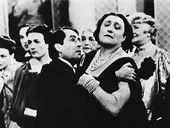 focusing on different characters. It was in this period that he showed many themed films such as The Grand Illusion [relationships created from effects of war], The Rules of the Game [love in many dimensions], The Crime of Monsieur Lange [vengeance] and The Rules of the Game [polarizing changes in character]. In most of his films he particularly paid attention to French traditions and interaction. However this could not be executed in the United States.
During the times when he signed with Universal and 20 th century fox he found it hard to find projects for himself, because they did not fit his style of expression and impression. At the 40s Hollywood was leaning towards technical aspects of film and what more can be added onto the shot making it more spectacular then it really is. Unfortunately this was not Jean's style. The once planned shots became improvisational, where dialogue was just another tool. It had lost the importance it once had in France. However, he still keeps his story themes the same. He just channeled them in a different way, which might appeal to the American audience. Films like The River, The Diary of a Chamber Maid and The Woman on the Beach show how tormenting love can be.ÃÂÃÂÃÂÃÂ Although these films were not popularly acclaimed, The Southerner proved to be the curse breaker. It showed the hardship of farmers which was relatable to the public. Also he brought with him the emotional turmoil the characters go through in order to achieve change. After making a pit stop in India, he would return back to France to pursue his passion again.
Back in France he did a string of comedies which include the famous The Golden Coach and the French Cancan. "Renoir saw [an] overdevelopment of the human rational faculty at the expense of the education of the senses and emotions" ("A transatlantic life", 2006, para. 1). Hence he made films that show the nature of how human progression lead to undermining the impressionistic values, which he himself did not agree to use until late retrospect.
Now let's go into how he showed realism in a very realistic way. He used deep focus where the subject is clear but the world around the subject still exists. Thus while the main characters are engaged with one another, the background and or the foreground will have its own activity simultaneously. This is also an ideal representation of real life. Another trick of his is to use lateral framing. His action always moves from one side of the frame to the other. He uses panning shots or dolly shots to show this style. It is like showing our perspective in a way, because when something happens to us we do not look at the sky but we look around us which is an equivalent of a frame. Finally he uses long takes to show real time and intensity. To really accentuate the reality factor of the film he uses long takes because they reflect real time. It is as though the audience is able to connect with the character because they are not fixed at edited angles, they are free like the audience.
Impressionism was the movement in which Jean Renoir was involved in. To simply put it, he told it as it is. Instead of recreating reality in a stylized format, he just showed it in ways that induce our senses to pick up on signals from the scenes. Also he created visual compositions that were striking enough to be embedded into the audience's mind. Now I shall talk about two films show these trends and styles.
For The Rules of the Game like explained in the class, the whole depth of field scene with the deep focus shot was the pivot moment of an impressionistic idea. The two men talking, the maid eavesdropping, the man who the two men are talking about, entering while they are leaving. This crucial 30 second scene says so much about the story. The fact is that they live in one house and their unlinked simultaneous actions are actually affecting each other. Lateral framing is shown when different characters are trying to hide from one another. The maid and the butler who trying to hide from the maid's husband and the lady of the manner hiding from her former love with her new lover are sort of the same pursuit and is all shown in one shot and take as the perspectives move back and forth from the audience is seeing. Another thing that I found interesting was the parallelism in the film. The rich aristocrats are hunting rabbits for pleasure and the chauffer is hunting the butler to take revenge for his wife, the maid. The main fact here is that both sides did not care of the consequence of killing. The rich do it, so why not the poor. A clear line of how status does not determine your action is presented to us. After all we go through the same phases of life even though we may be at different levels. However we have to understand that we have the tendency to act in similar ways with the rest of our characters in the world.
What I found in the southerner was how Renoir injected beauty into a tragedy. The family was going through an extremely tough time with replenishing the run down land, harboring a sick child and fending off jealous neighbors. Yet every time they were able to get back on their feet, I felt a glimmer of hope for them. The characters were rich portraying emotions and with a backdrop of tragedy who could not feel sorry for them? What was nice about this film was its simplicity of its characters. They didn't have much dynamic range like in other Renoir films, but what they had was a strong driving force. In the end their crops are destroyed by the thunderstorm yet the family does not give up because they accept what has happened to them and began to move on and progress towards the future.
I have learnt how and why to appreciate what I can see. Also I understand the importance of metaphors in dialogues and unlinked scenes. I share the philosophy of "The spectacle of real life is a thousand times richer than the most beguiling inventions of our imagination". (Bertin, 1991, p. 1) Simplicity which may be basic has its strengths and it never should be undermined in any way. Finally I end with this powerful sentence Renoir had said about the man and his makings, "All men who have created something of value do so not as inventors but as catalyzes" and that "Great men are simply those who know how to comprehend" (Cardullo, 2005, p.107).ÃÂÃÂ
Written by: Thena Thayalan
References:
Jean Renoir. Retrieved May 11, 2006 from http://en.wikipedia.org/wiki /Jean_Renoir
Bertin. C, Jean Renoir: a life in pictures.1991, the John Hopskin University Press, Baltimore, Maryland.
Cardullo. B, Jean Renoir Interviews, 2005, Jackson: University Press of Mississippi, Starkville, Mississippi.
* This paper was one of the best papers submitted to the Film History module offered by Film and Sound and Video, Ngee Ann Polytechnic, Singapore |